Key takeaways
- PPWR is driving European companies to replace plastic with fibre-based or wood packaging
- Common substitutions: plastic boxes → cardboard; plastic pallets → wood; multi-layer films → mono-material
- Fibre and wood are hygroscopic, absorbing and releasing moisture unlike plastic
- Well-meaning material switches can introduce new moisture risks without a prevention strategy
Across Europe, packaging engineers, procurement managers, and sustainability officers are under pressure to redesign packaging portfolios ahead of the new EU Packaging and Packaging Waste Regulation (PPWR). Many organisations are responding by replacing plastic with fibre-based alternatives such as paper, cardboard, and moulded pulp, or by reverting to wood for boxes and pallets. The intent is sound: improve recyclability and reuse, reduce single-use plastics, and align with Article 6 and Article 7 expectations. The unintended consequence, however, is often overlooked. Fibre and wood interact with moisture in fundamentally different ways from plastic, and a well-meaning material switch can quietly introduce new risks into the supply chain.
This article explores those moisture dynamics and frames the questions that should guide any PPWR-driven redesign.
Why PPWR is reshaping packaging material choices
PPWR targets and design-for-recyclability
PPWR has set ambitious targets for the European market. According to the European Commission, all packaging placed on the EU market must be recyclable by 2030, and recycling rates must reach 70% by 2030. Article 6 introduces design-for-recyclability (DfR) criteria, while Article 7 sets minimum recycled-content thresholds specifically for plastic packaging. Recent Commission guidance has further clarified how recyclability performance grades will be applied.
Three substitution patterns emerging
The combined effect is a strong regulatory push toward simpler, more recyclable formats, driving three substitution patterns:
- Plastic boxes and trays being replaced with corrugated cardboard or moulded pulp.
- Plastic pallets being replaced with wood pallets.
- Multi-layer plastic films (for example EVOH combined with PP) being replaced with mono-material plastics or fibre-based alternatives.
Each move can improve recyclability scores. Each also changes how the packaging system behaves in the presence of humidity.
How fibre and wood interact with moisture differently from plastic
Why multi-layer plastic works as a moisture barrier
Multi-layer plastic structures were rarely designed solely to contain a product. In many categories, they were engineered to act as certified moisture barriers, oxygen barriers, or both. Their layered construction is precisely what gives them performance, and precisely what makes them difficult to recycle as a single stream.
Fibre-based materials behave very differently.
Fibre absorbs and releases moisture
Paper, cardboard, and moulded pulp are hygroscopic, absorbing and releasing moisture from the surrounding air. Industry research consistently highlights that fibre-based packaging continues to face significant challenges in barrier performance, particularly against water vapour. As humidity rises, fibre packaging gains weight, loses stiffness, and can experience reduced compression strength, with measurable deterioration in stacking integrity across palletised supply chains.
Wood expands and contracts with humidity
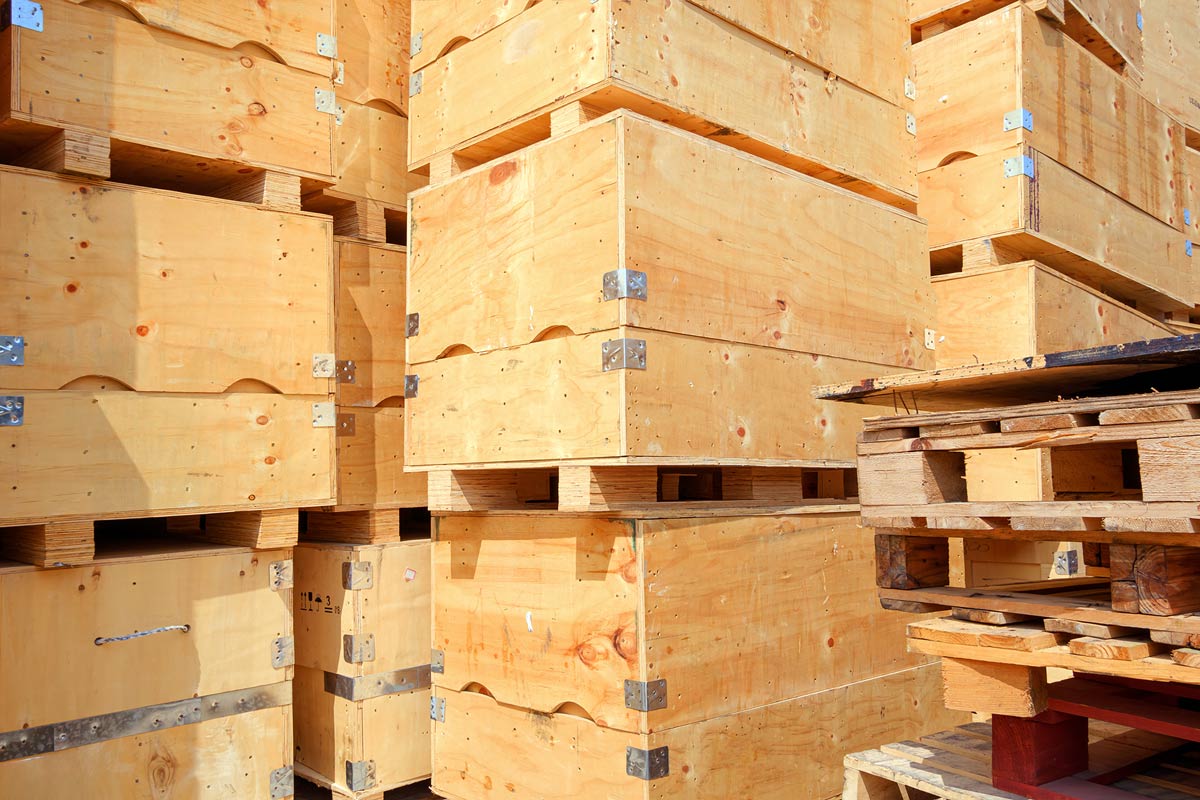
Wood, while structurally robust, is dimensionally sensitive to humidity. Wooden boxes and pallets shrink and swell with changes in ambient moisture, and they release moisture into enclosed environments such as shipping containers. A pallet loaded at high ambient humidity carries a significant moisture reservoir that can later condense onto goods during temperature swings in transit.
The shift from plastic to fibre or wood is therefore not a like-for-like exchange. It is a change in the moisture physics of the entire packaging system.
The recycled-fibre trend and its hidden trade-offs
An important nuance often missed in redesign discussions is the rising share of recycled fibre in cardboard supply chains. PPWR does not set recycled-content targets for paper or fibre in the way Article 7 does for plastic. The increase in recycled fibre content is largely a market-driven trend, shaped by sustainability commitments, raw-material economics, and customer expectations.
The technical implication is real. Studies on recycling cardboard packaging note that recycled fibres are typically shorter and more porous than virgin fibres (Virgin Fiber Recycled Fiber), which can produce:
- Reduced stacking and compression strength.
- Higher moisture absorbance under humid conditions.
- Faster loss of mechanical performance once exposed to water vapour.
For a packaging engineer evaluating a switch to higher recycled-fibre content, the key question is not simply whether the material qualifies as recyclable, but how it will perform across the full journey from production line to end customer.
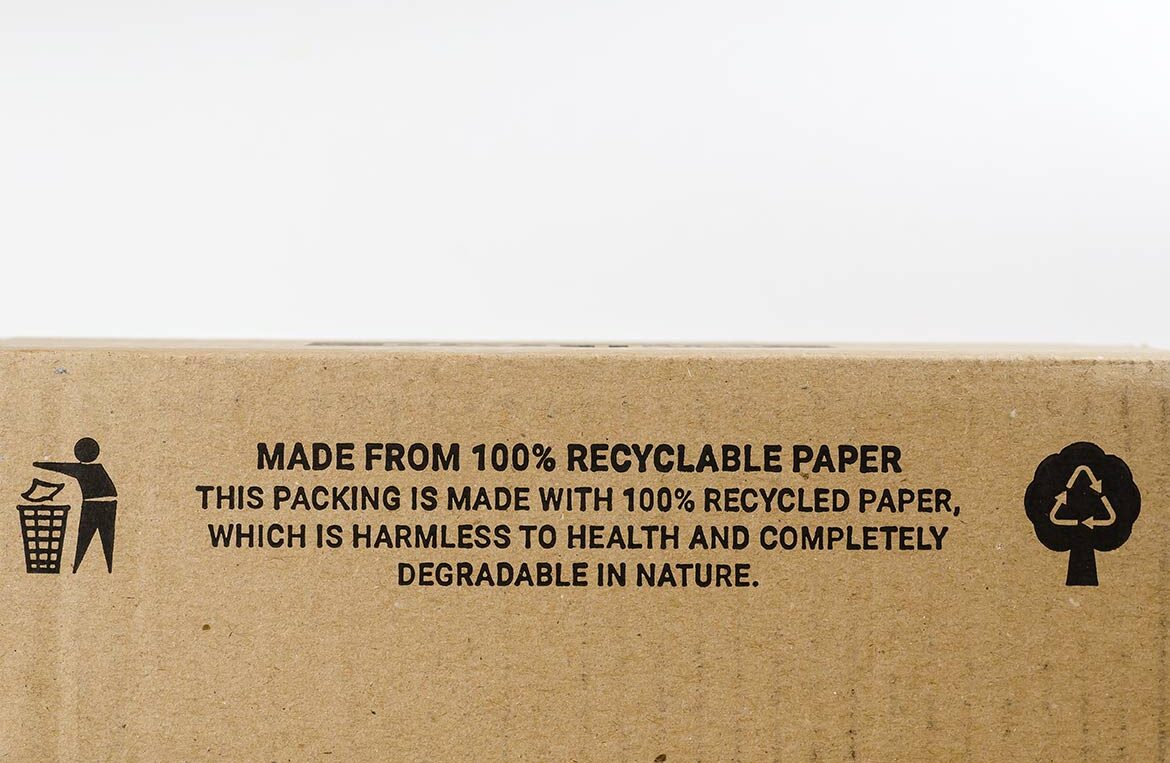
When the plastic moisture barrier disappears, what replaces it?
Multi-layer plastic films delivered, in many product categories, an excellent moisture barrier. When DfR criteria push toward mono-material structures or fibre-based alternatives, that built-in barrier is typically reduced or removed. Research from Aalto University on barrier performance in fibre-based packaging underlines that achieving comparable moisture protection in fibre alternatives remains an active area of materials development.
This is the question that should sit at the centre of every PPWR-driven redesign: when a plastic moisture barrier is removed, what replaces it?
In some cases, coatings or functional layers can restore part of the lost performance. In others, the answer lies outside the primary packaging itself, in secondary protection such as desiccants, liners, or controlled humidity at packing and storage. The answer is rarely “nothing”, even though the absence of an explicit replacement is a common pattern in early-stage redesigns.
Supply-chain moisture: the variables that compound the risk
Moisture risk in international supply chains is shaped by several main variables, and material substitution interacts with each of them:
- Climate at loading. The climate at the loading site affects the air sealed inside a container and the moisture already present in goods, fibre packaging, and wooden pallets stored in that climate before loading.
- Loading utilisation and free air space. Unoccupied air space influences how the container “breathes” and how internal moisture dynamics evolve in transit.
- Voyage duration and routing. Longer voyages typically pass through different climate zones, and these temperature transitions compound moisture risk well beyond the simple effect of extended time at sea.
- Container placement on vessel. Above or below deck, and exposure within the stack, influence temperature swings and condensation behaviour.
- Hygroscopic load of packaging materials. Fibre and wood components add their own moisture inventory to the system, on top of the goods themselves.
When plastic packaging is exchanged for fibre or wood, several of these variables are amplified simultaneously. A redesign that looks compliant on paper can behave very differently in a 40-day voyage through multiple climate zones.
Questions to ask during a PPWR-driven redesign
Rather than prescribing a single answer, a comprehensive prevention strategy starts with the right questions:
- If the new material absorbs moisture, has the impact on stacking and compression strength been tested under realistic humidity conditions?
- If the previous structure included a moisture barrier, what now performs that function in the redesigned system?
- How does the change in recycled-fibre content affect performance across the most demanding routes, not only the average shipment?
- Has the moisture inventory of new wooden pallets or fibre boxes been considered when planning desiccant capacity inside containers?
- For dry cargo shipments, are container vents being sealed and is the desiccant solution dimensioned for realistic, conservative absorption capacity rather than maximum absorption capacity specification figures?
- What does a side-by-side moisture performance test of the old and new packaging show after a representative voyage?
These questions are intentionally framed as part of the redesign process rather than objections to it. PPWR’s direction is clear and necessary. The objective is to ensure that recyclability gains are not offset by quality losses further down the supply chain.
Desiccants in a PPWR context: weight and capacity
Where moisture protection is needed inside a container, the choice of desiccant becomes part of the broader compliance picture. PPWR Article 10 addresses packaging minimisation, and weight efficiency is increasingly relevant in secondary protection. High-performing desiccants based on calcium chloride offer a higher absorption capacity per unit weight than low-performing desiccants such as clay and silica gel, making them well suited to weight-conscious applications without compromising on moisture protection.
Two practical points deserve emphasis. First, dimensioning should be based on a conservative absorption capacity, around 150% for calcium chloride solutions, rather than the upper specification figure, to ensure safe conditions in real-world shipments. Second, for dry cargo, sealing container vents during loading is a baseline recommendation, including in any AbsorTest™ or validation procedure, so the installed protection performs as intended.
Testing as a non-negotiable step in redesign
Moisture performance testing is a core element of good packaging redesign practice, not an optional add-on. The current interpretation of PPWR’s design-for-recyclability framework rewards material simplification, but the regulation does not relieve manufacturers of their obligation to deliver products in good condition. Field testing, climate-chamber simulations, and structured validation provide the evidence that a new fibre-based or wood-based system performs across the same conditions as the plastic format it replaces.
Absortech works alongside companies navigating exactly these transitions, drawing on decades of experience in moisture-sensitive packaging and tailored protection. Where redesigns shift the moisture dynamics of a supply chain, expert guidance and structured implementation help ensure that recyclability and product integrity advance together.
Moving forward with confidence
PPWR is reshaping the packaging landscape, and the move from plastic to fibre-based packaging or wood is in many cases the right strategic direction. The risk lies not in the regulation itself but in treating material substitution as a one-dimensional change. Fibre-based packaging moisture behaviour, wood packaging moisture risk, and the broader challenges of PPWR recyclable packaging deserve the same engineering rigour applied to the plastic systems they replace.
Organisations preparing their next redesign cycle are encouraged to map moisture exposure, validate new packaging through realistic testing, and design secondary protection accordingly.
For tailored protection strategies and expert guidance through this transition, Absortech’s team is available to discuss specific projects via the contact form, and the Absortech newsletter offers ongoing insight into innovative moisture control as PPWR implementation progresses.