
Key takeaways
- PPWR compliance rarely involves a single material change – it’s a system-level transformation
- Recycled content, mono-materials, thinner walls, and reusable formats each affect moisture protection differently
- Compounding effects mean packaging behaviour cannot be predicted from evaluating components alone
- Treat packaging redesign as an engineering systems exercise, not a sequence of isolated swaps
As the Packaging and Packaging Waste Regulation (PPWR) moves from policy to implementation, packaging engineers, quality assurance leaders, and logistics directors face a series of redesign decisions whose downstream consequences are not yet fully mapped.
While much of the public discussion has centred on recyclability targets and minimisation thresholds, comparatively less attention has been directed toward the cumulative impact of these changes on protective performance, particularly in relation to moisture. This article examines that gap and offers an analytical framework for evaluating redesign decisions through the lens of long-term reliability.
The objective is not to advance categorical conclusions, but to identify the variables that merit close observation as organisations iterate toward compliant packaging systems. Where regulatory interpretation remains in flux, that uncertainty is explicitly acknowledged.
Redesign as a multi-variable engineering challenge
PPWR compliance rarely involves a single material substitution. In practice, organisations are simultaneously adjusting recycled content ratios, transitioning to mono-material constructions, reducing wall thickness, and exploring reusable formats. Each adjustment carries its own performance signature; in combination, they form a system-level transformation whose behaviour cannot be reliably predicted by evaluating components in isolation.
This compounding effect is the central engineering challenge. A packaging system that has been validated over years of field experience may behave quite differently once several of its constituent parameters have been altered concurrently. Treating redesign as a systems exercise, rather than a sequence of isolated swaps, is therefore essential.
Recycled content considerations
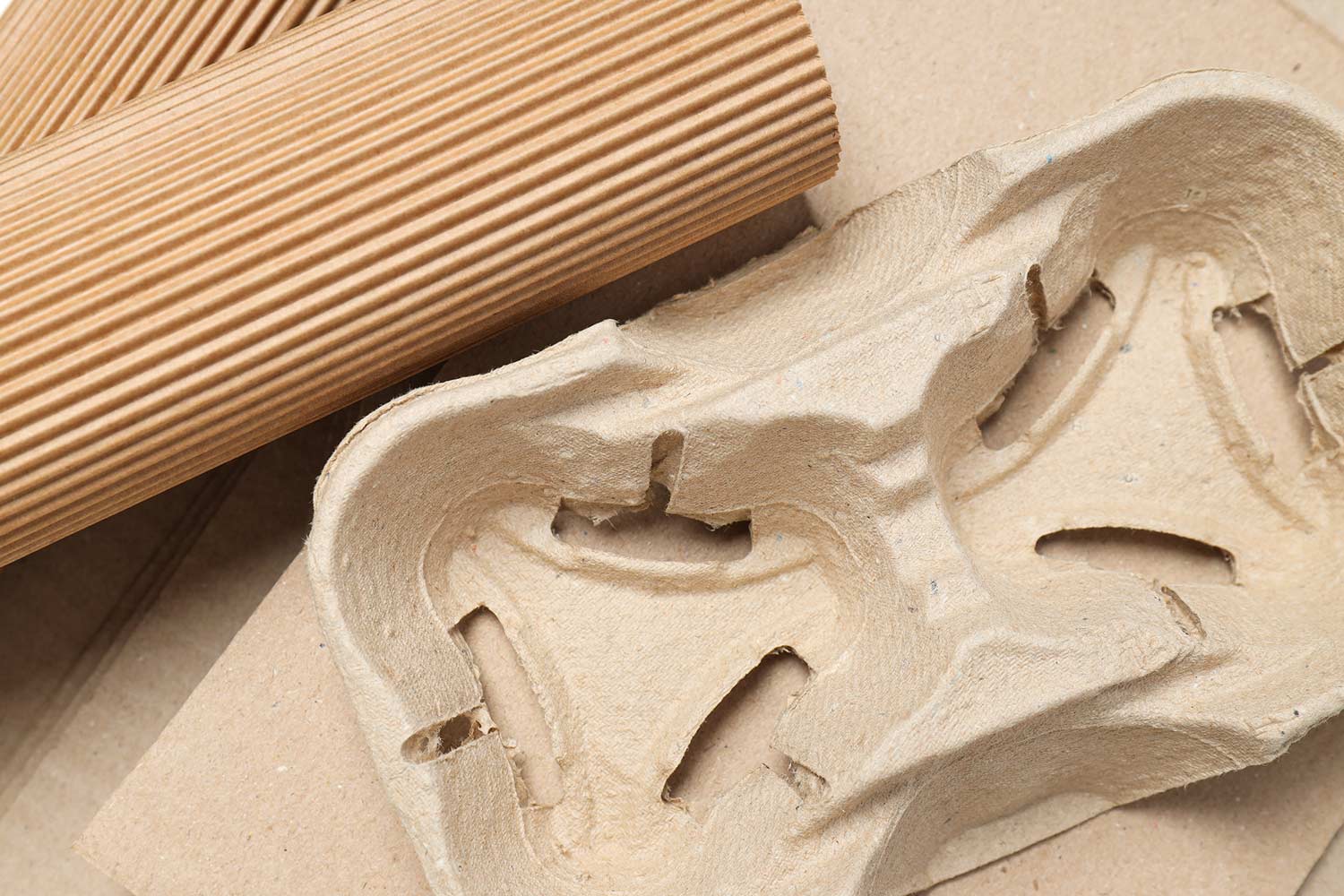
Fibre-based materials produced from recycled streams generally exhibit elevated moisture absorption capacity relative to virgin equivalents, which alters how the packaging responds within humid environments. Recycled polymers may likewise demonstrate variable barrier characteristics depending on feedstock origin and reprocessing history. Research published in ScienceDirect on functional barrier and recyclable packaging materials indicates that achieving consistent barrier behaviour with recycled inputs remains a developing field.
Mono-material transitions
Multi-layer laminates were historically engineered such that each layer contributed a discrete function: mechanical integrity, oxygen exclusion, or moisture resistance. The transition toward mono-material constructions, while advantageous for recyclability, can eliminate barrier functions that were previously embedded in the layered architecture. A study on sustainable alternatives in multilayer packaging observes that storage stability outcomes can vary considerably during such transitions.
Dimensional reduction
Reductions in wall thickness, cushioning, and overall material mass deliver clear sustainability gains, yet the relationship between thickness and moisture permeability is rarely linear. Modest reductions can, depending on the substrate, produce disproportionate changes in barrier performance.
Reusable formats
Reusable systems introduce a performance dimension absent from single-use packaging: durability across multiple cycles and varied climatic exposures. A reusable unit that performs satisfactorily during initial deployment may exhibit altered behaviour after repeated humidity cycling, temperature fluctuation, or sanitisation. Long-term reliability across service cycles becomes a distinct validation requirement.
Moisture dynamics as a sensitive performance indicator
Among the variables affected by redesign, moisture warrants particular scrutiny because it interacts simultaneously with packaging materials, the protected goods, and the surrounding atmosphere. These interactions accumulate over time and across the supply chain. Several factors merit deliberate evaluation:
- Material moisture content at the point of packing. Atmospheric conditions at loading influence the air enclosed within a container, as well as residual moisture within goods and packaging. Recycled fibre-based packaging frequently carries a higher baseline moisture content than its virgin counterpart.
- Loading utilisation. Free air space within a container governs internal breathing and moisture redistribution. Minimised packaging may alter loading geometry and increase unoccupied volume.
- Voyage duration and climatic transit. Extended voyages traversing multiple climate zones compound moisture exposure beyond the effect of duration alone.
- Barrier continuity. Mono-material redesigns may relocate, attenuate, or redistribute the points at which moisture is restrained within the packaging system.
These represent several of the principal variables. Additional contributors, including the nature of the goods, sealing integrity, and pre-shipment storage conditions, also shape the overall moisture profile.
Ownership and documentation as design inputs
An often underappreciated dimension of PPWR redesign is the matter of packaging ownership. As organisations restructure their packaging portfolios, clarity regarding which party owns the redesigned component, and therefore which party bears the technical documentation obligations under PPWR, becomes a substantive design input. Documentation responsibilities directly influence which entity is best positioned to validate protective performance, maintain compliance records, and respond to market surveillance enquiries.
Incorporating ownership considerations alongside material and performance criteria during the redesign process can prevent later compliance gaps, particularly where components are sourced from multiple suppliers or where reusable systems are administered by third-party operators.
The case for baseline benchmarking
A consistent recommendation across the discipline is to establish a documented performance baseline prior to initiating redesign. Without such a reference point, it becomes difficult to determine whether a revised solution preserves, enhances, or diminishes protection. A robust benchmark typically incorporates:
- Documentation of existing packaging specifications and observed performance under representative shipping conditions.
- Historical incidence records of moisture-related damage, including mould, mildew, and staining.
- Measurement of packaging material moisture content at loading.
- Review of claims data associated with packaging-related failure modes.
With a documented baseline in place, redesign alternatives can be evaluated against measurable criteria rather than assumption, supporting a comprehensive prevention strategy that aligns sustainability objectives with proactive risk management.
Material change impact: an analytical lens
The cumulative material change impact under PPWR is not a singular variable but a system-level transition. Research from ScienceDirect on monomaterial transition in packaging quantifies the environmental benefits while signalling that performance trade-offs require disciplined management. Approaching redesign as a systems exercise surfaces interactions that component-level analysis would otherwise obscure.
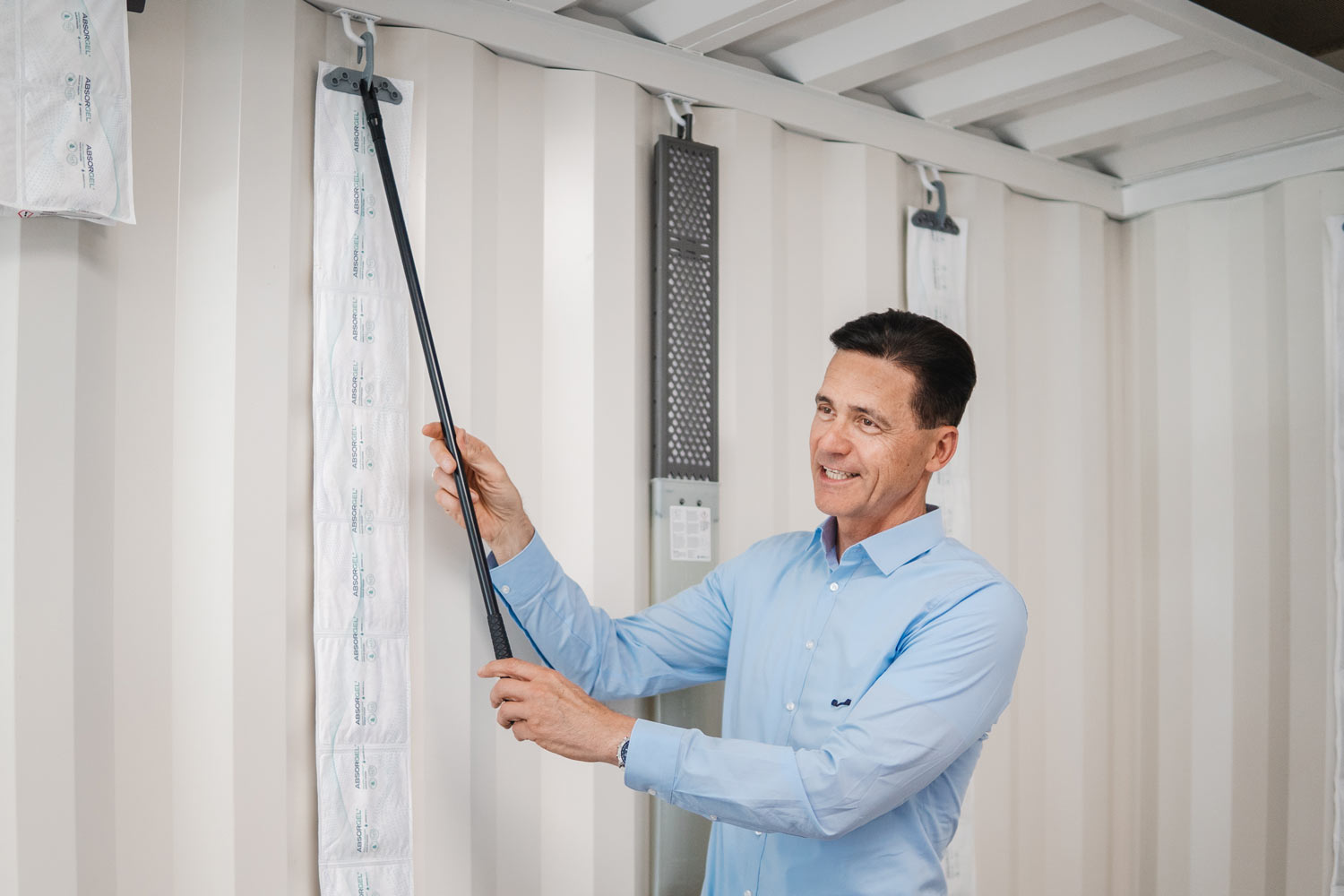
For weight-sensitive applications, the selection of moisture protection within the package is equally consequential. High-performing desiccants based on calcium chloride deliver a substantially higher moisture absorption capacity per unit weight than low-performing desiccants such as silica gel and clay, supporting PPWR-aligned weight reduction without compromising moisture control.
Dimensioning should reflect realistic absorption capacity, typically planned around 150% for calcium chloride formats, to ensure safe conditions across variable shipping environments.
Where Absortech contributes to the redesign conversation
Absortech brings decades of accumulated expertise in the behaviour of moisture within packaging systems. As organisations navigate the sustainable packaging challenges introduced by PPWR, Absortech is positioned to support the evaluation of how proposed redesigns may influence moisture dynamics, including material moisture behaviour, loading conditions, and climatic exposure during transit, thereby informing tailored protection strategies.
The objective is not to prescribe a single solution, but to provide expert guidance that complements the broader redesign process and helps mitigate moisture impact across the supply chain.
Conclusion and next steps
PPWR-driven packaging redesign will proceed as an iterative process of design, validation, and documentation. Protective performance warrants the same rigour applied to recyclability, minimisation, and reuse objectives. Establishing a performance baseline, treating redesign as a systems exercise, clarifying documentation ownership, and addressing moisture dynamics at an early stage will collectively support more dependable outcomes.
For organisations assessing how redesign may affect packaging protection performance, a structured conversation with moisture specialists can clarify which variables most warrant attention. To explore tailored protection strategies aligned with PPWR, contact the Absortech team through the contact form, or subscribe to the Absortech newsletter for continued analysis of moisture, materials, and regulation.