The European Union’s Packaging and Packaging Waste Regulation (PPWR) is reshaping how products are designed, shipped, and protected across the single market. Much of the public discussion has focused on recyclability targets and recycled content thresholds, yet two provisions, Articles 10 and 24, deserve closer attention from packaging designers and supply chain teams. Both push toward lighter, smaller packaging, and both could, depending on how redesigns are executed, alter the moisture environment surrounding goods in transit.
This article explores a forward-looking question rather than offering a compliance roadmap: when packaging is minimised and material structures change, what happens to the moisture barriers that have quietly protected products for decades?
Key takeaways
- PPWR Articles 10 and 24 push toward minimum weight, minimum volume, and reduced empty space by 2030
- Bubble wrap, air pillows, and loose-fill count as empty space under Article 24
- Thinner walls and less headspace incidentally reduce packaging’s role as a moisture buffer
- High-performing desiccants (calcium chloride) can offset lost protection without adding weight, aligning with minimisation goals
What articles 10 and 24 actually require 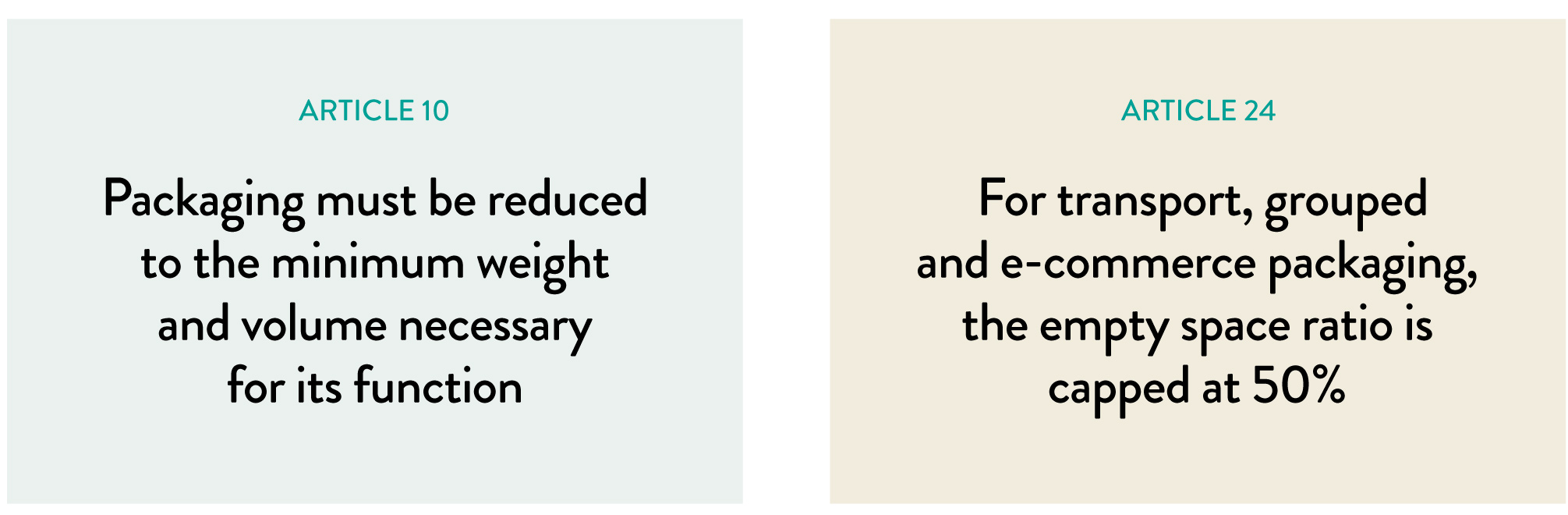
Article 10: minimum weight and volume
Article 10 establishes that, by January 2030, packaging placed on the EU market must be reduced to the minimum weight and volume necessary for its function, including product protection, hygiene, safety, and consumer acceptance. Designers will need to justify chosen dimensions and materials against performance criteria, and any features deemed non-essential may be challenged. Notably, this minimisation logic could extend to moisture protection solutions themselves: high-performing desiccants such as calcium chloride offer significantly greater absorption capacity per gram than traditional clay or silica gel, potentially allowing teams to meet protection requirements with less added weight.
Article 24: 50% empty space cap
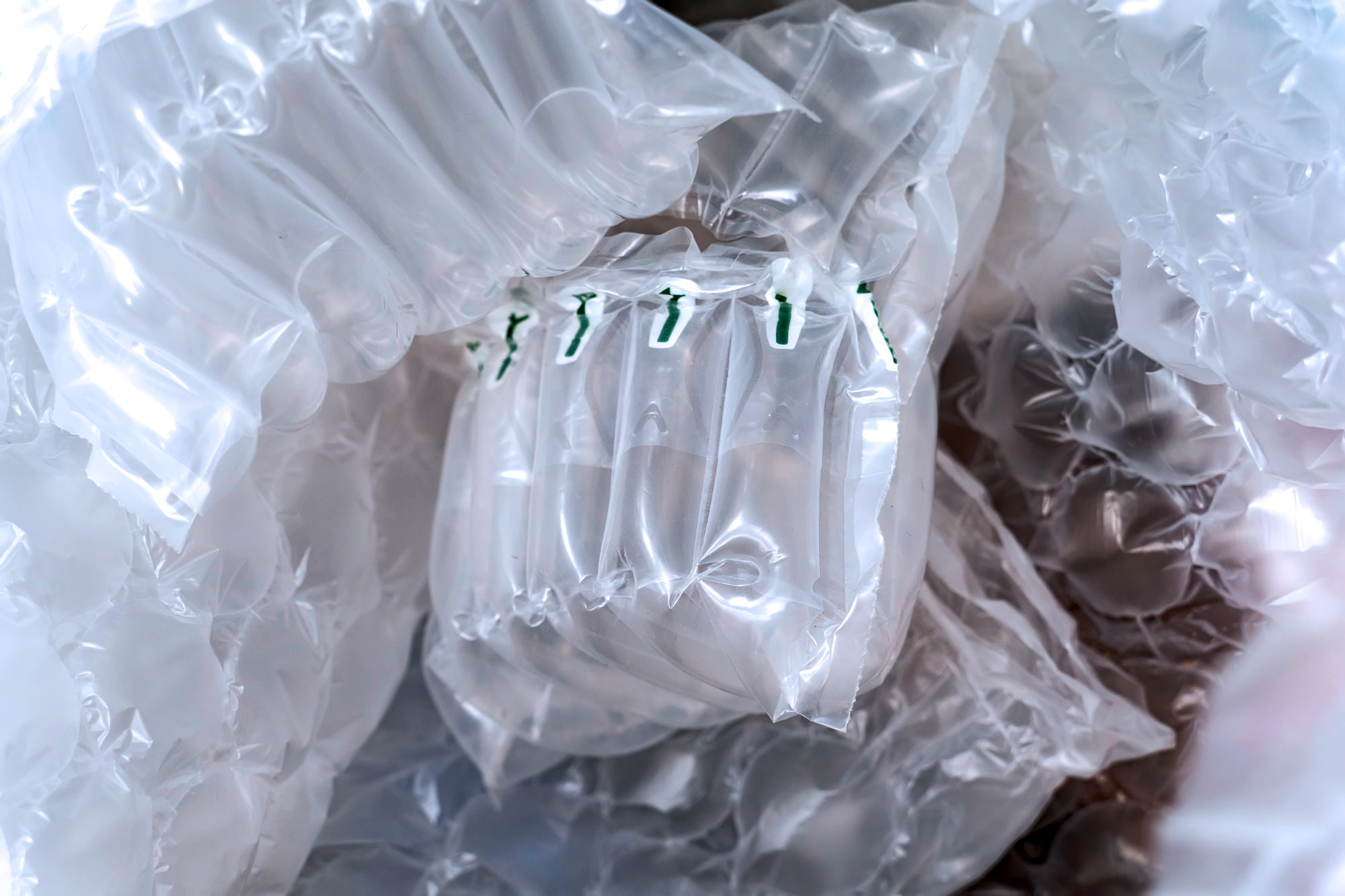
Article 24 addresses void space directly. The empty space ratio is capped at 50% for transport, grouped, and e-commerce packaging. Importantly, conventional space fillers such as bubble wrap, air pillows, and loose-fill inserts count as empty space under the regulation. This is a meaningful change for sectors that have historically relied on void fillers to immobilise products and buffer them against shock and vibration.
Methodology still being finalised
One important caveat: the methodology for calculating compliance is still being finalised. A delegated act is expected by February 2027, meaning the precise definitions of “necessary” weight and volume remain in development. Forward-looking teams are nonetheless modelling scenarios now, because waiting leaves little time to redesign and validate before 2030.
The hidden role of packaging in moisture dynamics
Packaging as an incidental moisture buffer
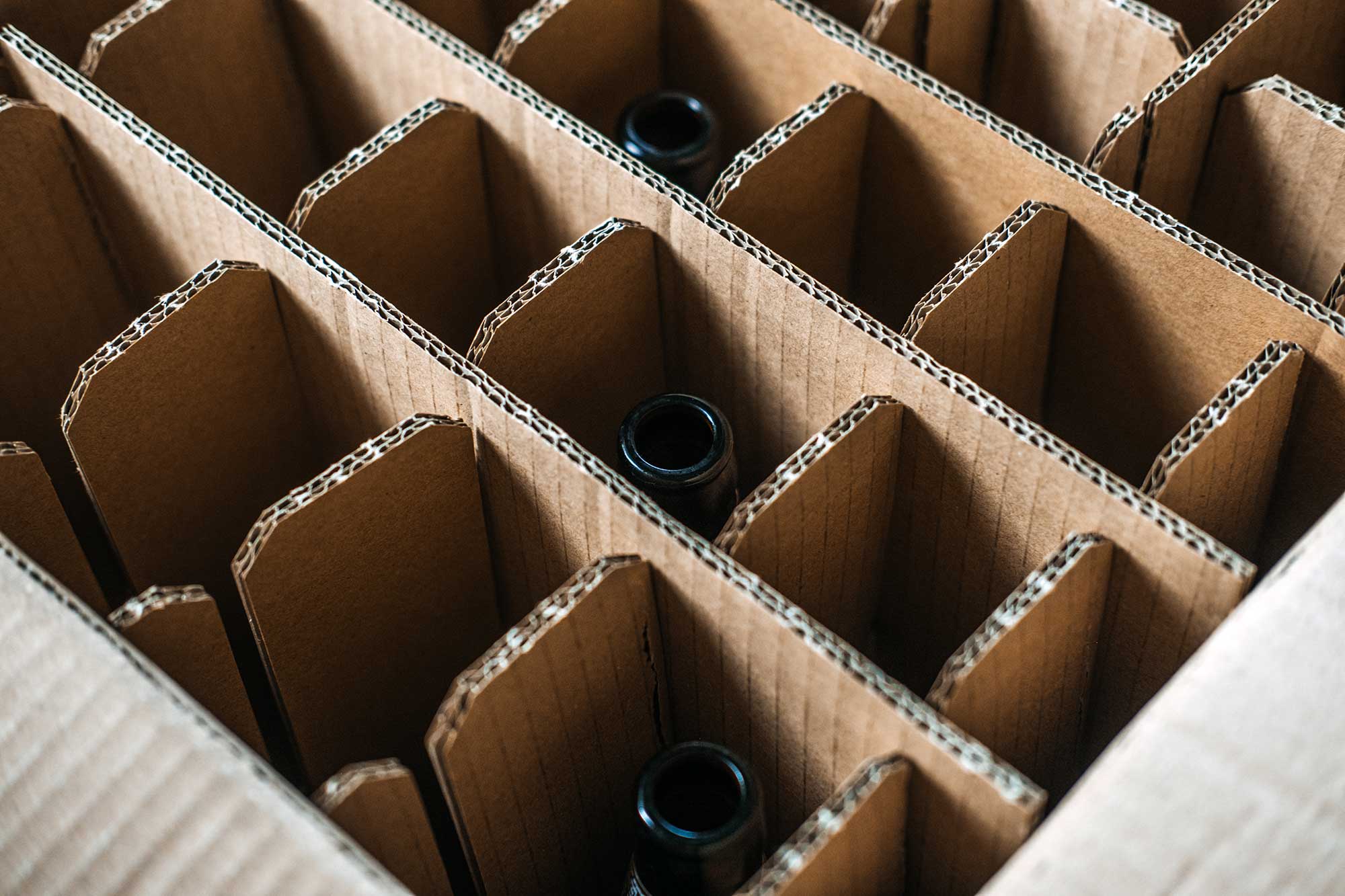
Packaging has always done more than contain a product. Multi-layer structures, denser walls, and generous headspace have, often incidentally, contributed to a stable internal microclimate. Thicker corrugated cases absorb and release ambient humidity more slowly. Multi-laminate flexible pouches, including aluminium or specialised polymer films, can deliver extremely low water vapour transmission rates. Void fillers occupying space around a product can also buffer humidity fluctuations inside the package.
What minimisation removes
Minimisation reduces these incidental protections at once. Thinner walls mean faster moisture exchange with the surrounding environment. Less headspace means smaller buffer volumes. Fewer fillers mean less material acting as a passive humidity sink.
Balancing sustainability and protection
None of this is a criticism of the regulation. The environmental case for reducing packaging waste is well established, and the EU is also targeting 30% recycled content by 2030 and 50% by 2040 for certain plastic categories. The point is simply that protection mechanisms previously bundled into the packaging itself may need to be reconsidered explicitly.
Mono-material transitions and barrier performance
Recyclability targets are driving a parallel shift from multi-layer laminates to mono-material structures. Multi-layer flexible packaging has long combined polymers, adhesives, and barrier films to deliver excellent oxygen and moisture barriers, but these structures are notoriously difficult to recycle. Mono-material alternatives, typically all-polyethylene or all-polypropylene, are far easier to process in existing recycling streams.
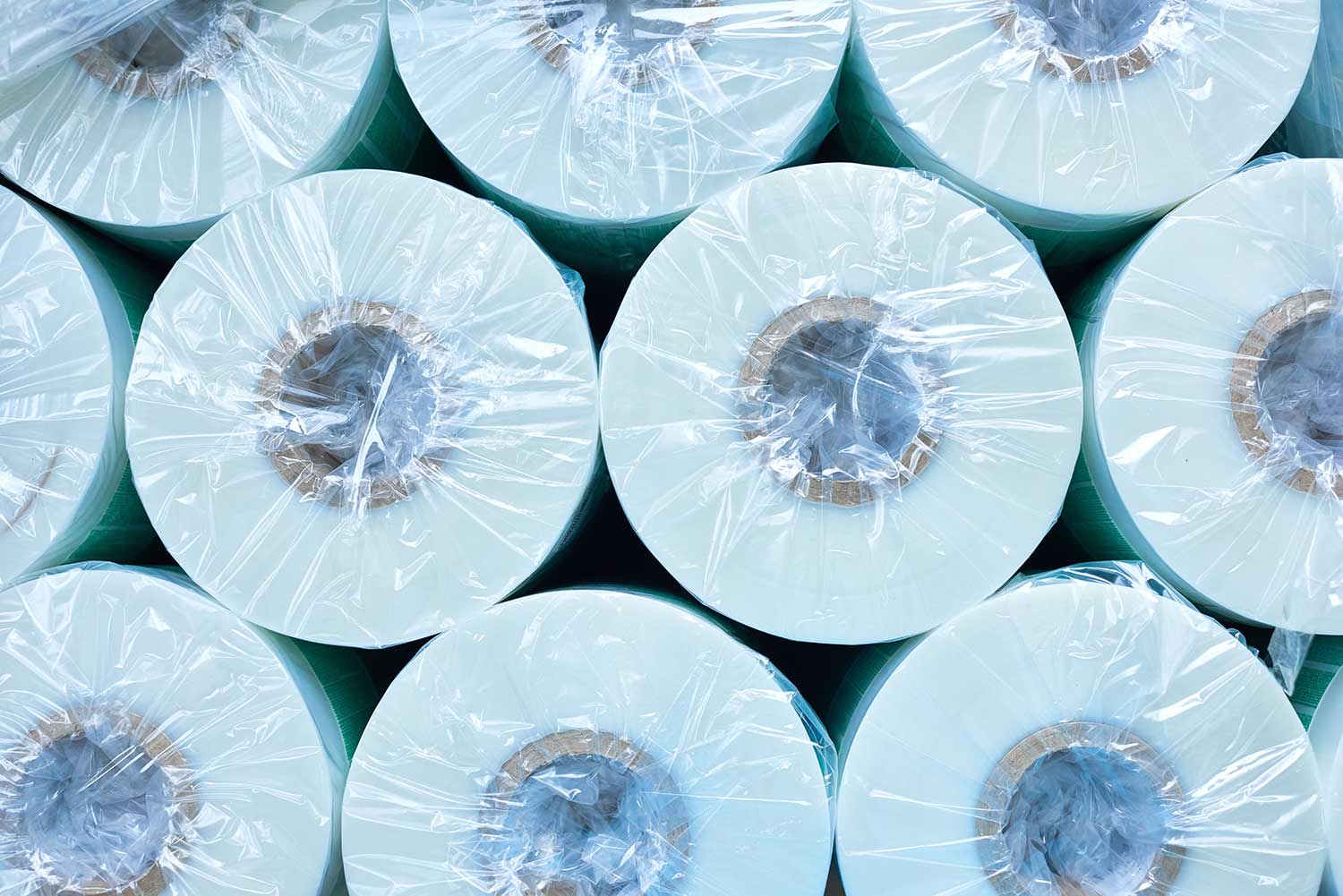
The trade-off is that mono-material flexible packaging often delivers lower intrinsic barrier performance than its multi-layer predecessors, although coated and metallised solutions are closing the gap. For products sensitive to water vapour, including foodstuffs, electronics, pharmaceuticals, leather goods, and metal components, barrier characteristics of the new format may differ meaningfully from the legacy specification.
This matters because product specifications, shelf-life calculations, and shipping protocols were typically developed against the original packaging’s barrier profile. A redesign that satisfies recyclability and minimisation requirements but quietly increases water vapour transmission could change the moisture environment without anyone explicitly noticing, until quality issues appear at the point of arrival.
Questions worth asking during redesign
For teams currently scoping PPWR-compliant redesigns, a structured assessment of moisture dynamics is a sensible addition to the design brief. The following questions may help frame that assessment:
- What is the water vapour transmission rate of the proposed packaging compared to the current specification, and how does that translate into expected internal humidity over the shipping duration?
- Have any incidental moisture buffers, such as void fillers, dunnage, or thicker secondary packaging, been removed as part of the redesign?
- Will the product travel through climate zones, or via sea freight, where condensation risk inside containers is significant?
- If the redesign moves from multi-layer to mono-material, has the new barrier performance been validated against the product’s sensitivity threshold?
- Are existing test shipments and quality data still representative, or should validation be repeated under the new configuration?
These questions do not presuppose a particular answer. In some cases, redesigned packaging will perform adequately without intervention. In others, a comprehensive prevention strategy involving precision-engineered desiccants, certified moisture barriers, or revised loading protocols may be needed to mitigate moisture impact and maintain long-term reliability.
A research question, not a settled answer
Absortech is currently exploring how packaging minimisation and material transitions could affect moisture dynamics in shipping environments, particularly for goods moving through long sea freight routes where temperature and humidity fluctuations are pronounced. The intent is not to position desiccants as the default response, but to ensure the moisture variable is not lost in the broader conversation about weight, volume, and recyclability.
The PPWR is an ambitious framework that will reduce waste and accelerate the transition to a circular packaging economy. Achieving its goals without unintended consequences for product quality requires that protection performance is treated as an explicit design parameter rather than an assumed property of the materials. Building moisture assessment into the workflow now will be considerably easier than retrofitting it after compliance issues emerge in the field.
For teams mapping how EU packaging weight reduction and packaging void space regulation will reshape their portfolios, the sustainable packaging moisture risk question is one worth opening early.
Subscribing to the Absortech newsletter or reaching out for expert guidance can support that exploration with practical reference points drawn from a wide range of industries.