The European Union’s packaging landscape is entering a new phase. With the adoption of EU Regulation 2025/40, commonly referred to as the PPWR (Packaging and Packaging Waste Regulation), the existing Packaging and Packaging Waste Directive will be superseded by a directly applicable framework. For organisations engaged in transport and industrial packaging, this transition introduces a harmonised set of rules that will influence design decisions, documentation practices, and supplier relationships well beyond the consumer goods segment.
This article presents an interpretive overview based on currently available information. Its purpose is to provide guidance for internal preparation and readiness, not to serve as definitive compliance advice. Several operational details remain pending through delegated acts, and stakeholders are therefore advised to treat current interpretations as provisional while the regulatory landscape continues to evolve.
Key takeaways
- PPWR is a directly applicable EU regulation, not a directive – member states cannot vary implementation
- Applies to ALL packaging placed on the EU market from 12 August 2026, including transport and industrial packaging
- Broad material scope: plastic, paper, metal, glass, wood, composites – both EU-produced and imported
- Transport packaging decisions (including desiccants) fall within scope for supply chains crossing EU borders
What the PPWR is and why it matters
The PPWR is a regulation, not a directive. In practical terms, it will apply directly across all EU member states from 12 August 2026, without requiring national transposition. The distinction is significant: whereas the previous Packaging and Packaging Waste Directive allowed member states considerable latitude in implementation, the PPWR establishes a harmonised baseline across the single market, while still allowing member states some flexibility in certain areas.
Based on currently available information, this transition is intended to reduce inconsistencies between member states, close existing loopholes, and establish a unified set of rules for all packaging placed on the EU market. The change is particularly pertinent to transport packaging, industrial packaging, and secondary packaging formats, which have historically varied between jurisdictions.
The regulation also signals a broader policy trajectory, connecting packaging governance with circular economy objectives, waste reduction, and substance safety. Although the detailed rules have not yet been finalised, understanding the regulation’s overall direction remains valuable. It enables organisations to anticipate future obligations and prepare accordingly.
Scope of the regulation
The PPWR applies to all packaging and packed products placed on the EU market, irrespective of material or origin. This encompasses plastic, paper, metal, glass, wood, and composite formats, whether produced within the EU or imported from third countries. The European Commission’s guidance emphasises that the regulation is deliberately broad in its material and format coverage.
A point frequently under-represented in consumer-facing summaries is the inclusion of transport and industrial packaging. Pallets, crates, stretch film, strapping, liners, and protective components used in business logistics fall within the scope of the PPWR. For organisations managing supply chains in which moisture-sensitive products travel long distances, transport packaging decisions, including the use of desiccants as part of the overall packaging system, will increasingly be shaped by the same regulatory framework that governs retail formats.
Geographic scope nuance
The geographic reach of the PPWR contains an important nuance. Packaging that is shipped out of the EU and becomes waste outside the EU is not considered to have been placed on the EU market, and therefore falls outside the regulation’s direct reach. Based on currently available information, this distinction is particularly relevant for importer-exporters who receive goods into the EU and subsequently re-export them to third countries, or for manufacturers within a member state who export goods outside the EU.
The regulation could be read to include specific documentation and traceability expectations even for re-export flows, pending further clarification through delegated acts. Organisations operating such flows may wish to map their packaging journeys carefully, distinguishing between packaging that remains within EU waste streams and packaging that exits the market before becoming waste.
Key thematic areas relevant to B2B audiences
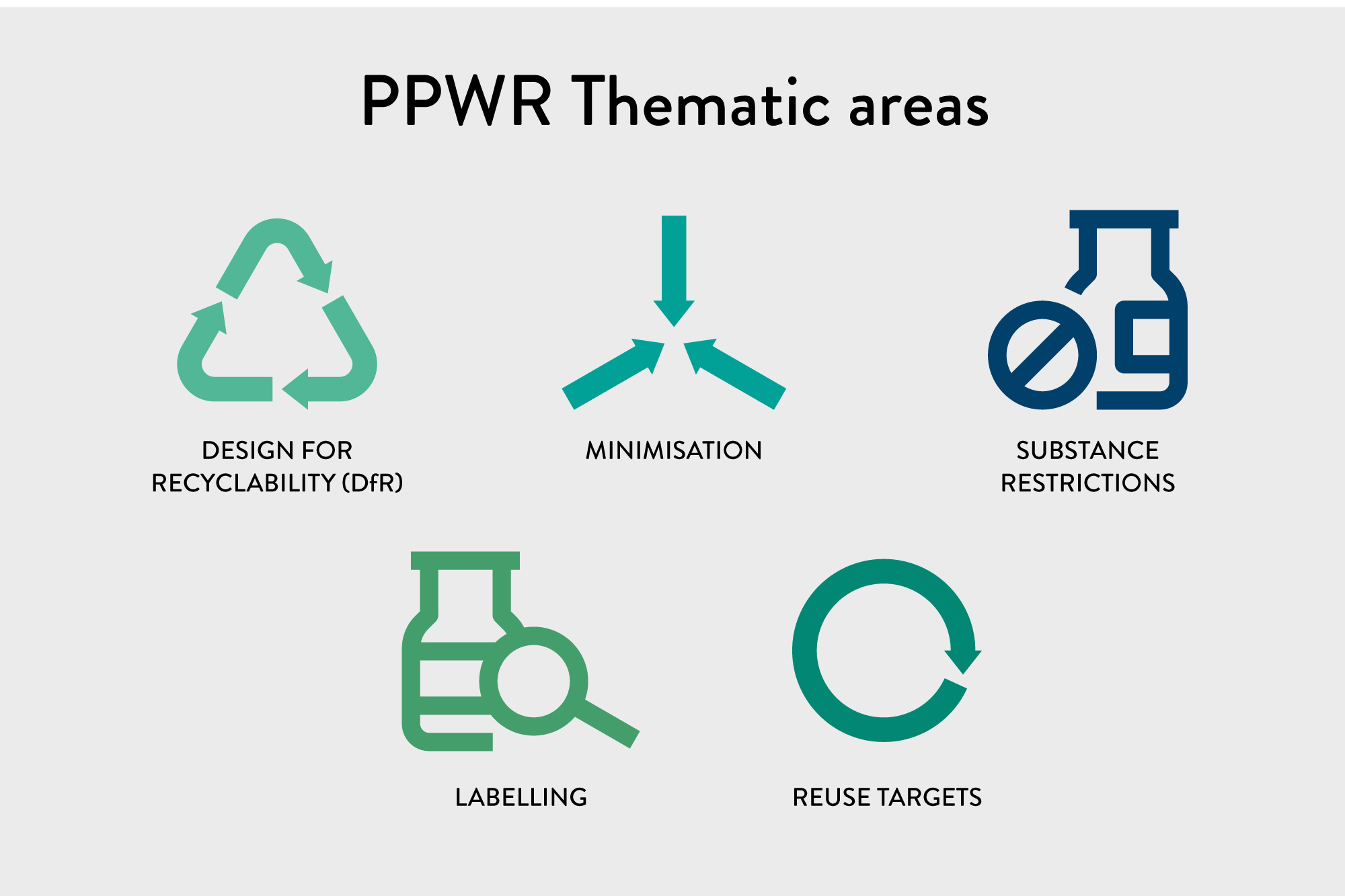
The PPWR organises its obligations around several thematic areas. Each carries implications for product design, procurement, and documentation, although the specifics of many depend on forthcoming delegated acts.
Design for recyclability
Design for Recyclability (DfR) is expected to become a central compliance axis. The regulation foresees performance grades that will categorise packaging according to recyclability criteria. The specific grading methodology and associated thresholds have not yet been finalised. The current interpretation is that packaging will be required to demonstrate measurable recyclability performance, with non-compliant formats progressively restricted.
Minimisation
Minimisation obligations aim to reduce unnecessary packaging weight, volume, and layers. The methodology for assessing packaging minimisation remains under development. Based on currently available information, the assessment is likely to consider functional necessity, protective performance, and logistics efficiency, rather than relying solely on prescriptive weight limits. In this context, the overall packaging system, including moisture protection components, may benefit from periodic review to ensure that the quantity deployed remains proportionate to the protective outcome required.
Substance restrictions
The PPWR introduces restrictions on certain substances in packaging, including limits on specific per- and polyfluoroalkyl substances (PFAS) in food-contact packaging. The regulation largely aligns with definitions and limits previously established under REACH. The regulation could be read to encompass additional substance categories over time, particularly as delegated acts refine the framework.
Labelling
Harmonised labelling is anticipated through delegated acts, with standardised pictograms indicating material composition and appropriate disposal routes. Until these pictograms are published, organisations are advised to regard current labelling approaches as transitional.
Reuse targets
Reuse targets will apply to specific packaging formats and sectors. Notably, the European Commission has indicated that pallet wrapping and straps are exempt from the 100% reuse requirement, a clarification that illustrates how sector-specific interpretations continue to evolve.
Packaging ownership and technical documentation
One of the more operationally significant elements of the PPWR is the clarification of packaging ownership. The regulation identifies the party responsible for a given piece of packaging placed on the EU market, and that same party inherits an expanded technical documentation burden from Day 1.
Based on currently available information, responsible parties will be required to prepare conformity assessments and issue a Declaration of Conformity, supported by technical files that evidence compliance across the applicable thematic areas. This documentation burden represents a material change compared with the previous directive, under which obligations were often distributed less formally across supply chains.
The regulation could be read to include scenarios in which responsibility shifts depending on whether packaging is manufactured, imported, or re-branded. Organisations with complex supplier networks may benefit from mapping their packaging portfolio against the new ownership logic at an early stage, ensuring that proactive risk management and structured implementation processes are in place ahead of the application date.
Moving toward PPWR readiness: the role of right-sized protection
A recurring theme across DfR, minimisation, and documentation obligations is the expectation that packaging systems be proportionate to their functional purpose. It should be noted that the methodology for quantifying minimisation requirements has not yet been finalised. Based on currently available information, organisations preparing for PPWR readiness may find value in reviewing whether each component of the packaging system, including moisture protection, is deployed in quantities aligned with the actual protective performance required.
In practice, this suggests that reducing the overall volume of packaging material, and by extension the volume of desiccants required to achieve the desired moisture control outcome, could support alignment with the regulation’s broader minimisation direction. Precision-engineered desiccants, applied through a carefully dimensioned approach, may contribute to this objective by enabling reliable moisture protection without over-specification. For organisations seeking to refine their current moisture protection setup in anticipation of evolving requirements, expert guidance can help identify opportunities to optimise material usage while preserving product quality during transport.
What remains uncertain: delegated acts in progress
While the PPWR establishes a clear direction, many operational specifics remain under development. The regulation empowers the European Commission to adopt delegated and implementing acts that will define:
- DfR performance grades and assessment methodology.
- Minimisation assessment criteria and documentation expectations.
- Harmonised labelling pictograms and placement requirements.
- Sector-specific reuse and refill obligations.
Until these acts are published, stakeholders are advised to regard current interpretations as provisional. Premature compliance decisions, taken before delegated acts are finalised, may require rework once the regulatory picture stabilises.
What companies should prepare for
As the regulation matures, several preparatory priorities emerge for organisations in this sector. These include following the publication of delegated acts in the EU Official Journal, reviewing European Commission guidance documents, and observing sector-specific interpretations as industry associations respond to clarifications.
Internal readiness activities are equally relevant. Useful starting points include:
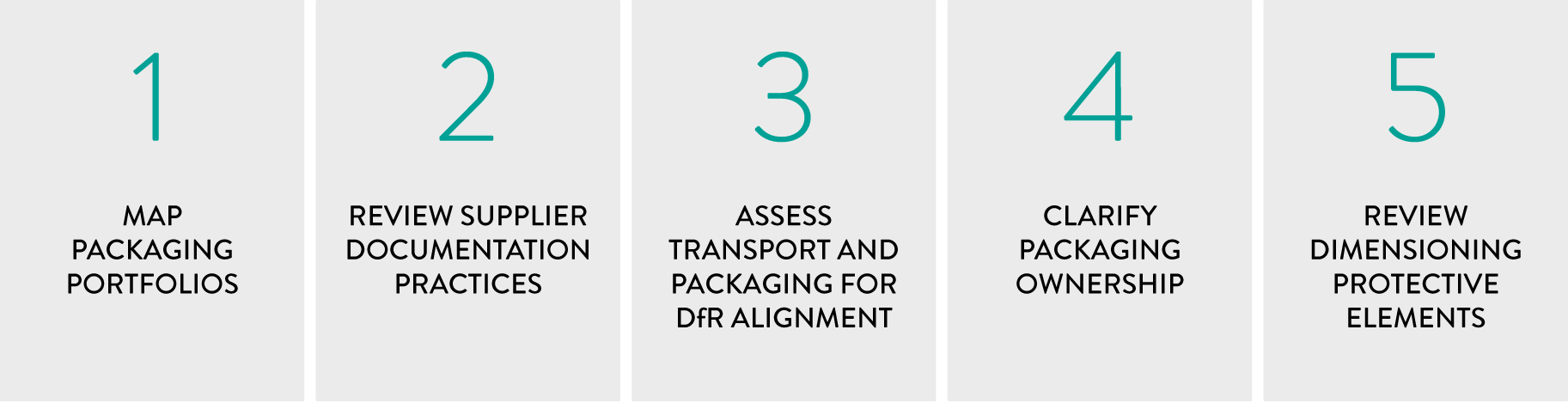
- Mapping packaging portfolios against PPWR thematic areas.
- Reviewing supplier documentation practices and the availability of technical files.
- Assessing transport and industrial packaging formats for DfR alignment.
- Clarifying packaging ownership across import and re-export flows.
- Reviewing the dimensioning of protective elements, including moisture control, to ensure proportionate use of materials.
Absortech is following the PPWR closely, together with its potential implications for moisture protection within transport and industrial packaging contexts. No claims are made here regarding how specific desiccant products may or may not be classified under the regulation. The intent is to support informed dialogue as delegated acts clarify the specifics, providing expert guidance and reliable information to stakeholders navigating the transition.
Conclusion
The PPWR packaging regulation represents a significant shift in EU packaging governance, moving from a directive-based framework to a directly applicable regulation with harmonised obligations across member states. Its broad scope, encompassing all packaging regardless of material or origin, brings transport and industrial packaging firmly into the regulatory conversation, while its clarified ownership model introduces an expanded technical documentation burden for responsible parties.
With the application date of 12 August 2026 approaching, and many details still developing through delegated acts, the most constructive posture is one of informed preparation. Readers are encouraged to remain engaged with PPWR developments, follow updates from the European Commission, and continue refining internal packaging strategies as the regulatory picture becomes clearer.
Those interested in ongoing updates on packaging regulation and moisture protection considerations, particularly within the transport and industrial packaging sector, are welcome to subscribe to Absortech’s newsletter or to initiate a dialogue through the contact form.