Climate chamber data has long been used as the benchmark for comparing desiccants, however these controlled conditions do not represent the complex and constantly changing environment that goods experience inside a real shipping container.
Inside a container, air warms and expands during the day, then cools and contracts at night, which allows humid air to enter repeatedly through door seals and vents. Cargo and packaging release moisture as temperatures rise, while the steel walls cool rapidly when outside temperatures drop. Because climate chamber absorption values show what happens only under steady conditions, they do not reflect the actual environment the containerised goods are exposed to.
Why climate chamber absorption results do not reflect real shipping conditions
Climate chamber measurements typically use fixed temperature and humidity levels. Many desiccants reach their highest recorded absorption at about 95 % RH and 35 to 40 ºC. These settings are ideal for generating very high absorption figures, sometimes reported in the 400 to 600 % range under certain protocols, however they are not ideal for protection because real shipments rarely maintain constant, moisture rich conditions.
In addition, chambers vary in duration, airflow, humidity steps and reporting formats, which makes cross manufacturer comparisons unreliable for dimensioning.
What actually happens inside a container during transport
Daily and route specific temperature swings
Before loading and after unloading, containers can experience daily temperature cycles up to around 30 ºC, with typical land based swings near 22 ºC. Once at sea, temperatures change more gradually, although conditions still shift as vessels move between climate zones. Extreme measurements on routes such as Japan to Memphis have reached highs of about 57 ºC and lows near minus 29 ºC.
Humidity spikes and condensation cycles
Humidity inside containers can exceed 90 % RH during rapid cooling. When the air warms, moisture evaporates from pallets, packaging and hygroscopic cargo, and when it cools, the air loses moistureholding capacity and condensation forms on colder surfaces. Steel cools quickly due to outside air exposure, and some cargo can cool faster than the surrounding air, creating localised condensation zones.
Moisture released from cargo, pallets and packaging
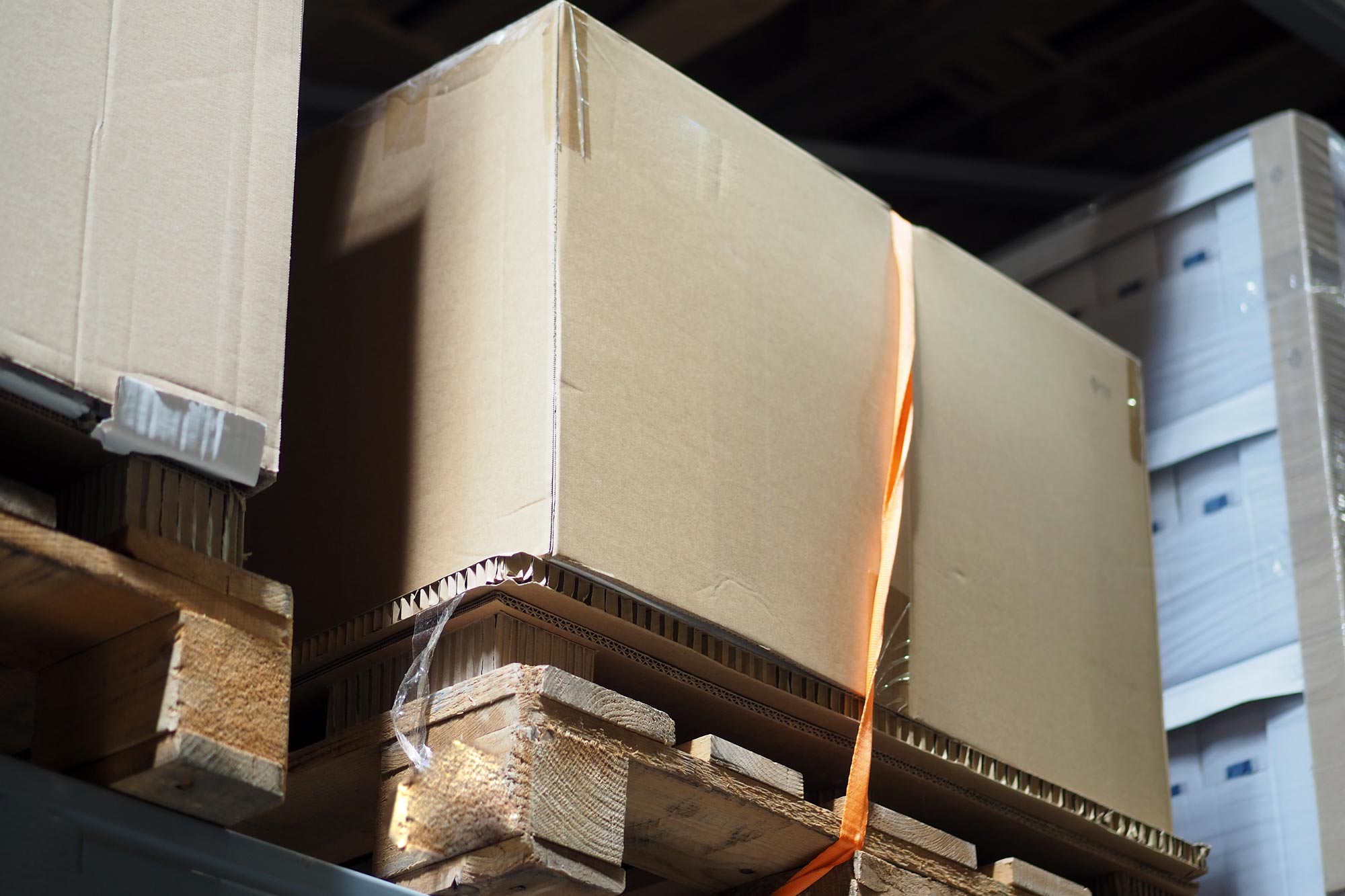
Wooden pallets typically contain about 15 to 20 % moisture, with higher values in extreme cases, and they release moisture as temperatures rise. Cardboard and other organic packaging behave similarly as moisture reservoirs. This behaviour depends on environmental conditions and cannot be replicated in constant condition climate chambers.
Container breathing and continuous moisture ingress
As containers warm during the day, internal air expands and flows outward through vents and door seals, then during nighttime cooling, contracting air draws in humid external air. This daily breathing cycle significantly increases total moisture exposure over time.
Taken together, these influences create a microclimate that changes hour by hour, and any desiccant chosen only by climate chamber performance will not reflect container conditions over an extended voyage.
Why traditional desiccant materials behave differently in real conditions
Clay and silica gel are adsorption materials that hold moisture on internal surfaces. Independent summaries show silica gel typically adsorbs about 15 to 25 % of its dry weight, with clay at similar levels. Because these materials do not chemically bind moisture, they saturate quickly under fluctuating high humidity and continuous ingress caused by container breathing, and their effectiveness declines as relative humidity rises.
Why calcium chloride behaves differently in real shipping environments
Calcium chloride removes moisture through a chemical process that converts water vapour into a stable brine, which enables high and sustained capacity over long durations. Peer reviewed work confirms strong sorption behaviour across wide humidity and temperature ranges that align with field realities. Purity is also important, and higher purity calcium chloride, approximately 94 % and above, supports stronger and longerlasting capacity than lower purity grades used in some products.
Even with these advantages, correct sizing depends on the actual moisture load of the shipment, which requires realworld data rather than climate chamber assumptions.
AbsorTest: bridging climate chamber results and real container performance
Because containers present shifting temperature, humidity and air exchange conditions, real shipment data is essential for correct dimensioning.
AbsorTest measures temperature, humidity, dew point, shock, light and location with the AbsorTrack data logger during real shipments, then reports the total absorption and the environmental profile so dimensioning and placement can be optimised. Using realworld data helps avoid both under dimensioning and over dimensioning, and it supports sustainability and regulatory goals, including the EU Packaging and Packaging Waste Regulation, PPWR.
Conclusion: real protection requires real data
Climate chamber values offer a limited view of desiccant performance because they do not capture temperature cycles, humidity spikes, condensation events or continuous air exchange.
Adsorption materials such as silica gel and clay have limited capacity at high humidity and saturate quickly under container breathing. High purity calcium chloride provides more reliable absorption in real shipping, however correct sizing still depends on real shipment data captured with AbsorTest.