Key takeaways
- Silica gel is the default choice but often underperforms in long-haul ocean freight
- Three chemistries dominate container shipping: silica gel, clay (bentonite), calcium chloride
- Calcium chloride outperforms in high-humidity long-transit scenarios through true absorption
- Cargo type, transit route, and climate zones determine which chemistry fits
Most shippers default to silica gel. It is familiar, inexpensive, and visible in nearly every consumer package, from shoeboxes to vitamin bottles. Yet for containerised cargo crossing oceans and climate zones, this default selection frequently fails to deliver the moisture protection required. Moisture damage continues to disrupt global supply chains, generating substantial annual losses through cargo claims, spoilage, and rejected shipments.
Industry analysis on container rain confirms that condensation inside shipping containers remains one of the most underestimated risks in ocean freight, particularly on long-haul routes that traverse multiple climate zones.
This article presents an objective, technical comparison of the principal desiccant chemistries used in containerised shipping, namely silica gel, clay, and calcium chloride (CaCl₂). The strengths of silica gel are acknowledged where they apply, and the conditions under which calcium chloride delivers measurable performance advantages for humidity-sensitive cargo are subsequently outlined.
Understanding container desiccant selection in industrial contexts
What container desiccants do
Container desiccants are precision-engineered moisture absorbers installed inside shipping containers to mitigate moisture impact during transit. Their relevance increases significantly in humidity-sensitive industries, where condensation, container rain, and fluctuating temperatures threaten product integrity.
When moisture damage occurs
Moisture damage typically arises when containers transition between climate zones, when warm humid air is sealed at the point of loading, or when packaging materials retain residual moisture absorbed in the loading environment.
Industries most at risk
Sectors most affected include pharmaceuticals, electronics, food, automotive, textiles, and agriculture, where moisture exposure may result in corrosion, mould, mildew, staining, and diminished product performance.
Commercial impact of unaddressed humidity
Unaddressed humidity contributes to cargo claims, regulatory non-compliance, and reputational damage. Beyond direct product losses, delayed shipments and remediation expenses erode operational margins, positioning desiccant selection as a measurable contributor to supply chain continuity.
How each desiccant actually works
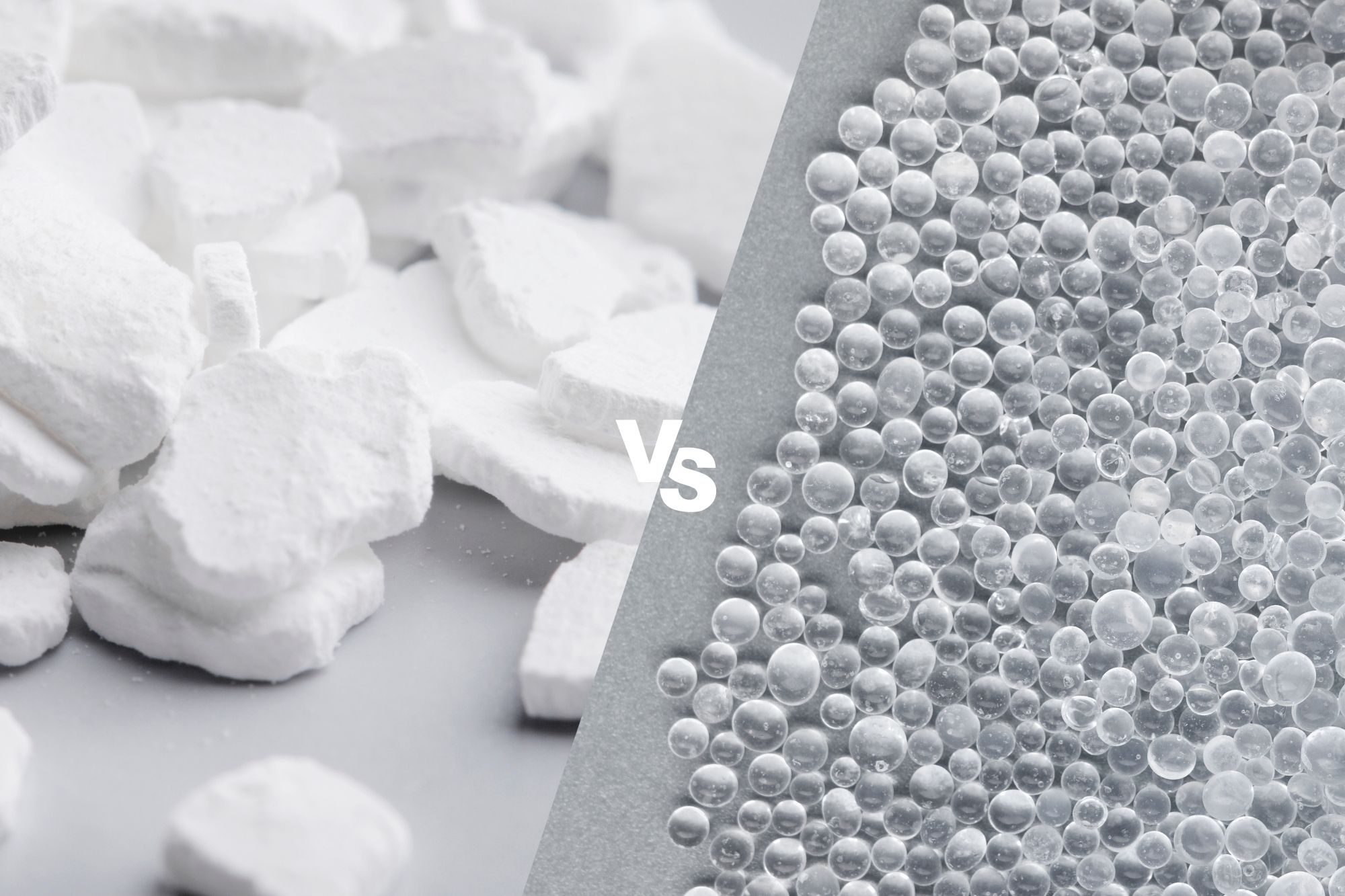
The three desiccant chemistries dominating the container shipping market operate through fundamentally different mechanisms. Understanding these mechanisms clarifies why performance varies so significantly across transit scenarios.
Silica gel
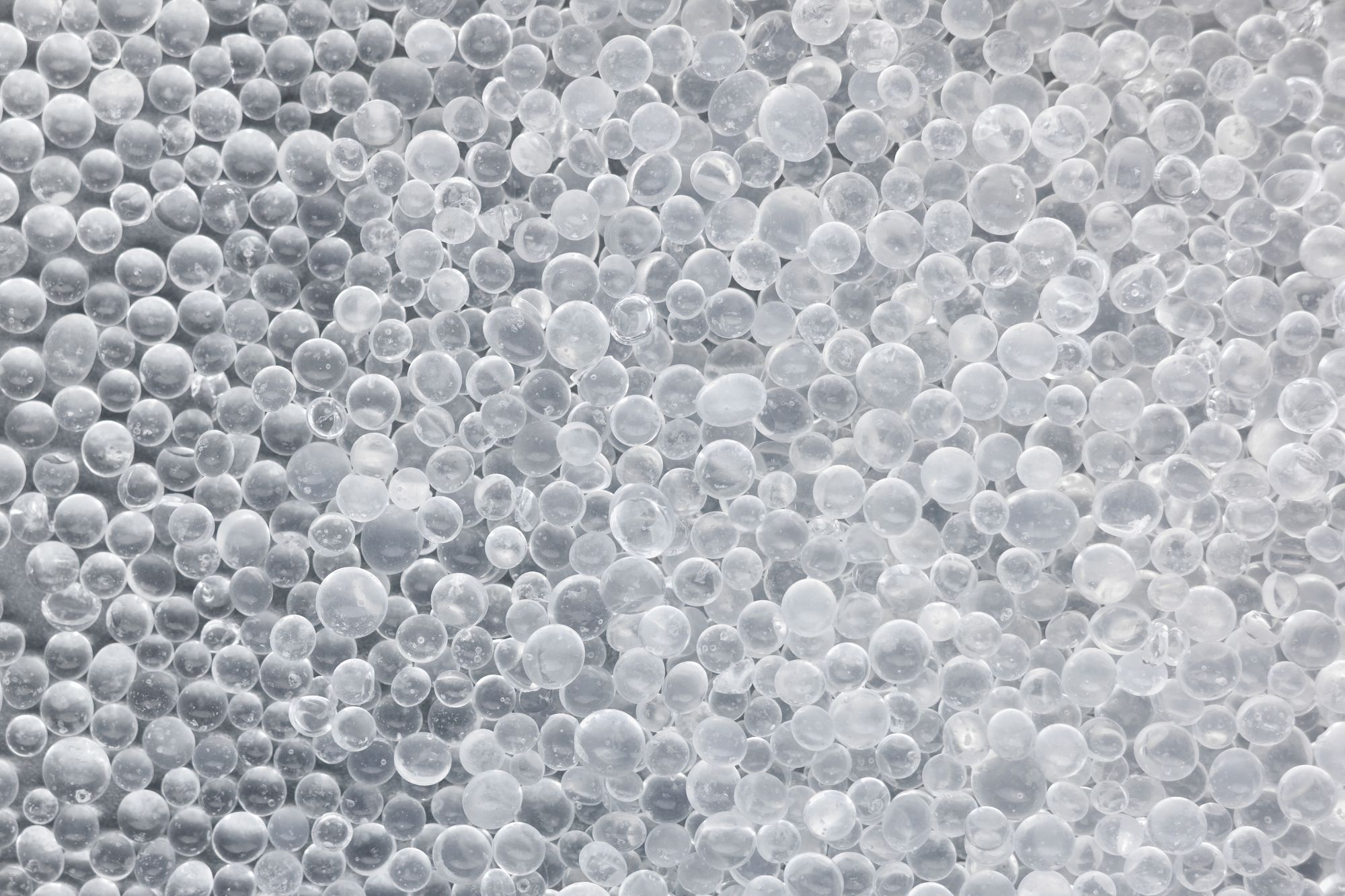
Silica gel is a porous synthetic form of silicon dioxide. It absorbs moisture through adsorption, a physical process in which water molecules adhere to the vast internal surface area of the granules. The granules remain solid and dry to the touch throughout the process. Silica gel performs most effectively in lower humidity ranges (approximately 20 to 40 percent relative humidity) and is non-corrosive, food-safe in approved grades, and compatible with colour-changing indicators.
Clay (bentonite) desiccants
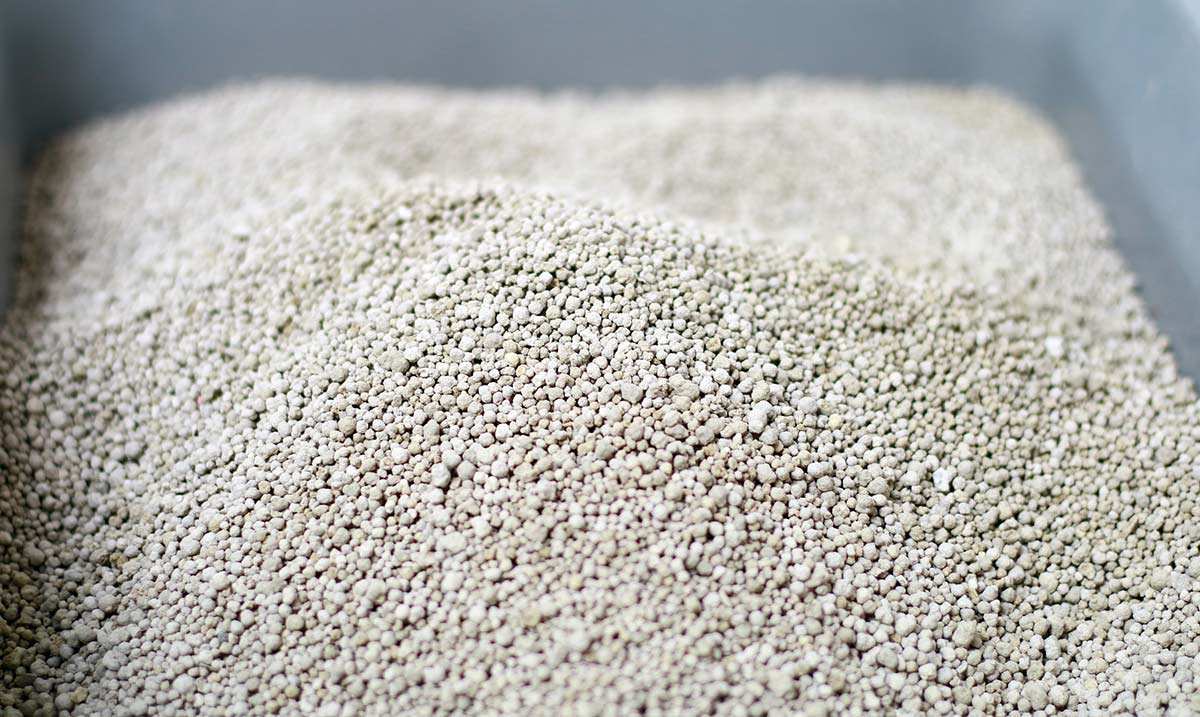
Clay desiccants, produced from naturally occurring bentonite, also function through adsorption. They are economical and effective in low-humidity, short-duration applications. Performance can decline as temperatures rise, and absorption capacity per unit weight remains modest. Clay is typically deployed for inland transport or controlled storage environments rather than long-haul maritime shipments.
Calcium chloride (CaCl₂)
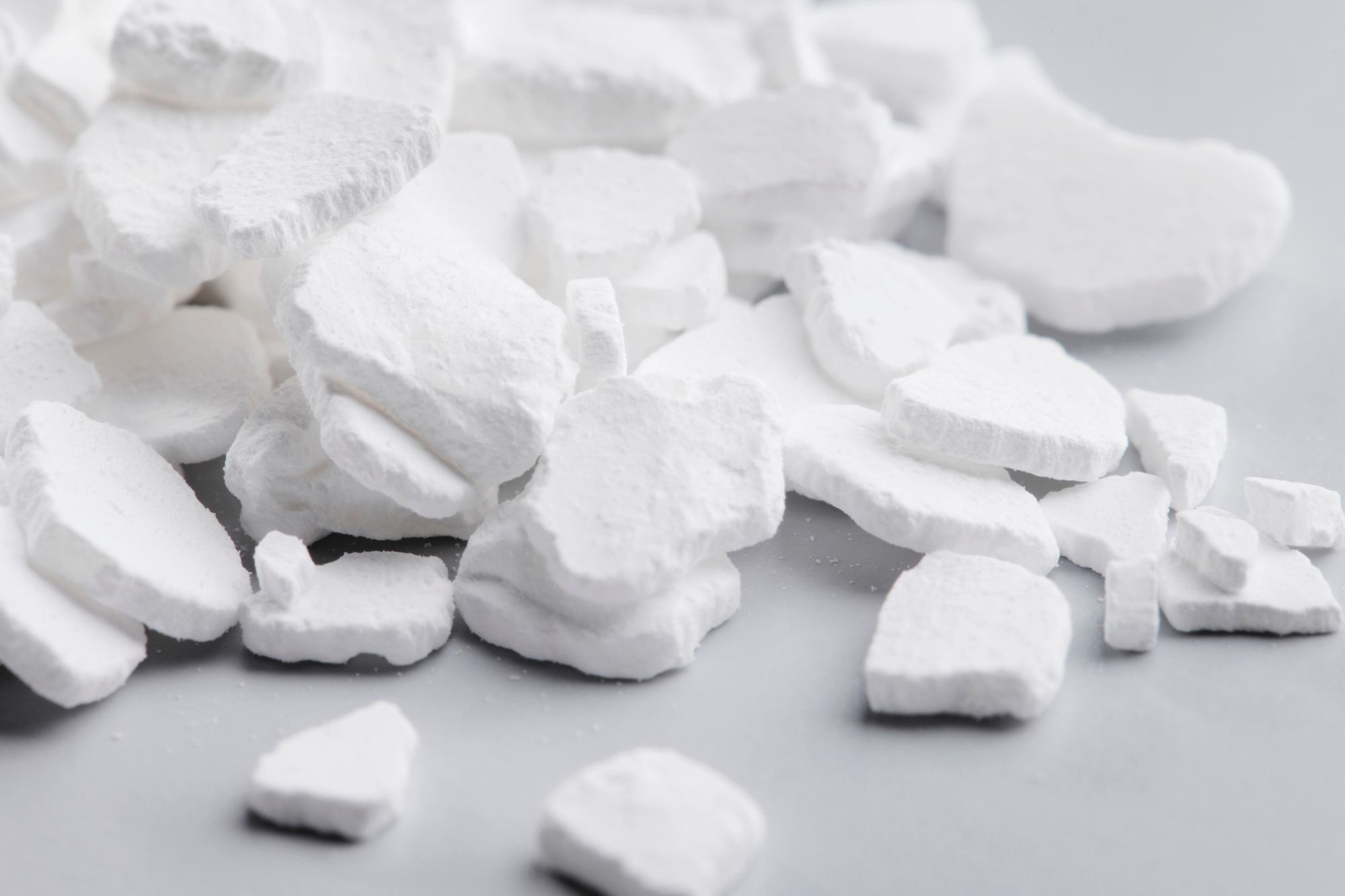
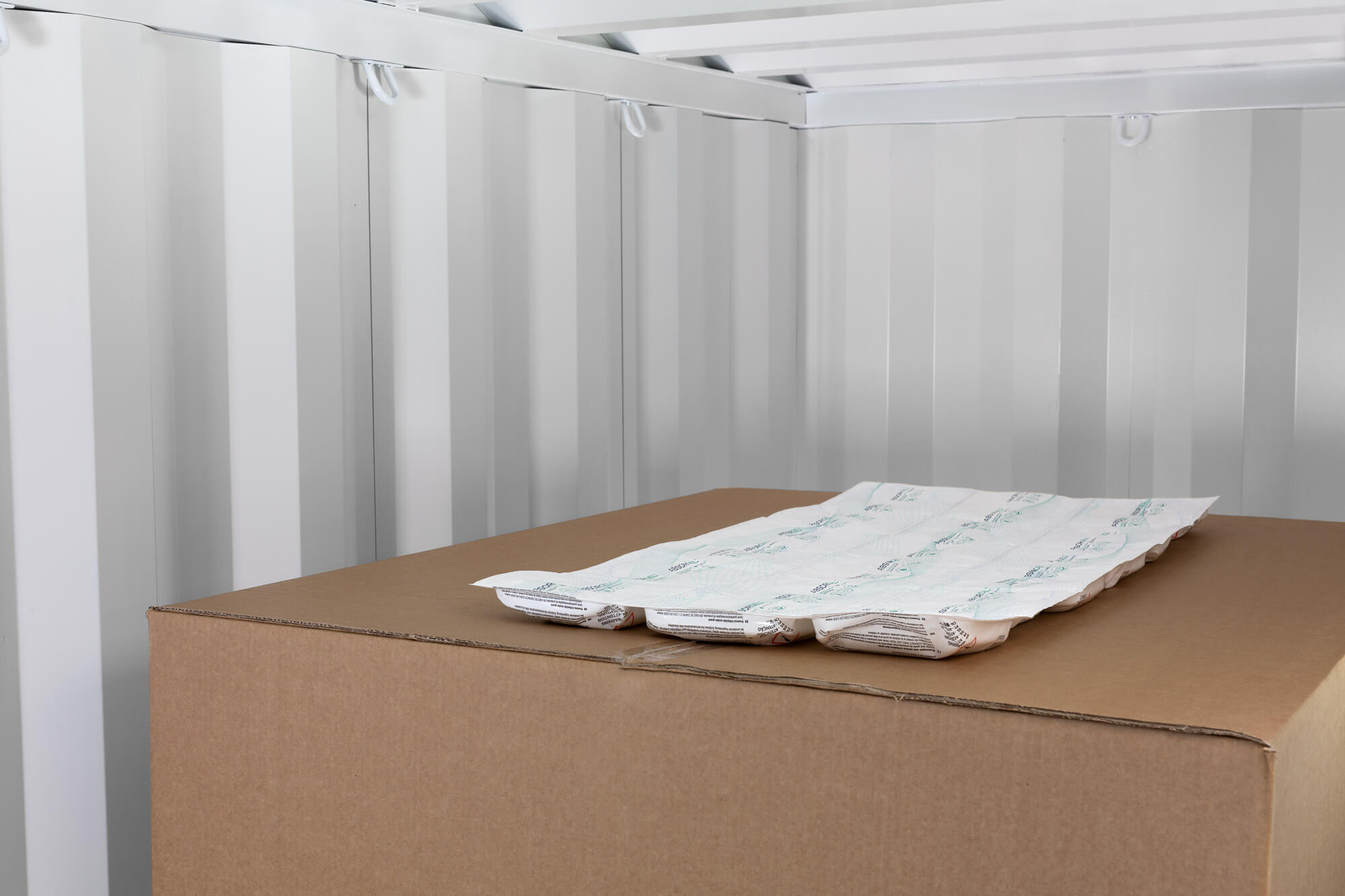
Calcium chloride absorbs moisture through absorption, a chemical process in which water is drawn into the desiccant and transformed into a liquid brine. A gel agent is commonly used in combination with the calcium chloride to bind this liquid into a gel that is securely retained within the pouch.
This deliquescent behaviour enables sustained moisture absorption across a broad humidity range, including the elevated humidity levels encountered inside loaded containers on long ocean voyages. The transition to a gel state requires engineered pouch design to ensure secure retention throughout transit.
Side-by-side comparison
The table below summarises the principal technical parameters relevant to container shipping decisions.
| Parameter | Silica gel | Clay (bentonite) | Calcium chloride |
|---|---|---|---|
| Moisture absorption capacity (% of own weight) | Up to 35% | Up to 25% | Up to 300% (dimensioned at around 150% for safe conditions) |
| Optimal working humidity range | 20–40% RH | Below 40% RH | 40–98% RH |
| Weight required per container | High | High | Low |
| Effective lifespan in transit | Short to medium | Short | Long (up to 90 days and beyond) |
| Cost per gram of moisture absorbed | High | Higher | Low |
| End state | Solid granules | Solid granules | Gel or liquid retained in pouch |
| Typical application | Small enclosed spaces and sachets | Inland transport and storage | Containerised long-haul cargo and in-box desiccants shipped in containers |
When silica gel is the right choice
Silica gel offers genuine advantages in specific applications and should not be dismissed. Its strengths align with the following scenarios:
- Small, enclosed packaging where humidity is already low and only minor fluctuations occur.
- Electronics protection within sealed pouches, retail boxes, or shipping cases for short distances.
- Food-grade sachets in pharmaceutical and nutraceutical products where regulatory certification is required.
- Applications requiring visible humidity indicators, where colour-changing silica gel provides immediate status confirmation.
- Document and archival preservation in controlled environments.
In these contexts, silica gel performs reliably because the moisture load is limited and the operating humidity remains within its effective range.
When calcium chloride wins
The conditions inside a sealed shipping container during ocean transit differ substantially from those inside a retail package. Internal humidity routinely exceeds 80 percent, particularly when containers move from tropical loading ports through cooler ocean passages. Under these conditions, calcium chloride delivers measurable performance advantages:
- Long-haul ocean shipments crossing multiple climate zones, where sustained absorption across high humidity ranges is essential.
- Humidity-sensitive cargo including electronics, automotive components, machinery, textiles, leather goods, food, and pharmaceuticals.
- Routes traversing tropical, equatorial, or monsoon regions where condensation risk is elevated.
- Container loadings where packaging materials, such as wooden pallets or cardboard, contribute residual moisture.
- Applications subject to packaging minimisation frameworks such as PPWR Article 10, where the weight-to-absorption ratio is a determining factor.
For accurate planning, CaCl₂ absorption capacity should be dimensioned at approximately 150 percent rather than the 300 percent specification figure, thereby ensuring reliable performance under real-world conditions where loading humidity, packaging moisture, and voyage variability all influence demand.
Real numbers: Absortest data from a customer route
Theoretical specifications inform initial planning, while field validation confirms performance. In a representative Absortest deployment on a 32-day route from Southeast Asia to Northern Europe, calcium chloride desiccants were installed in a container loaded with humidity-sensitive industrial goods. Container vents were sealed in accordance with dry cargo protocol. Data loggers recorded the following:
- External ambient relative humidity: 65 to 92% across the route.
- Internal container relative humidity maintained between 45 and 58% throughout transit.
- Total moisture absorbed by the installed CaCl2 desiccants: approximately 145 % of their initial weight, confirming the 150% dimensioning recommendation.
- Cargo arrived without visible condensation, corrosion, or staining.
A parallel test using silica gel at comparable weight reached saturation within the first 12 days, after which internal humidity rose progressively, with measurable condensation observed on container walls upon discharge. The contrast illustrates why default selection matters for cargo of significant value.
Frequently asked questions
Is calcium chloride safe for food and pharmaceutical cargo?
Yes. Calcium chloride desiccants designed for container use are securely sealed within engineered pouches that retain the gel state. Provided the desiccants are installed correctly and do not come into direct contact with goods, they are widely deployed for food, beverage, and pharmaceutical shipments.
Can silica gel be used for ocean freight containers?
It can be used, although typically not as the primary solution for humidity-sensitive cargo. Silica gel saturates relatively quickly at the elevated humidity levels encountered inside containers, requiring substantially higher weight to achieve comparable protection. For long voyages, calcium chloride is generally more efficient and cost-effective per gram of moisture absorbed.
How much desiccant is required for a standard 20 or 40 foot container?
Dimensioning depends on cargo type, packaging moisture, voyage duration, and route climate. General baseline dimensioning can be found in the technical datasheet. A structured assessment, supported by Absortest field validation, determines the appropriate quantity for specific conditions. Generic rules of thumb often result in over- or under-dimensioning.
How long do calcium chloride desiccants remain effective?
Properly dimensioned CaCl₂ desiccants protect cargo for the full duration of typical ocean voyages, including transit times of 60 to 90 days and beyond, provided installation and container preparation follow recommended protocols.
Should container vents be open or sealed?
For dry cargo shipments protected by desiccants, container vents should be sealed. This maintains controlled internal conditions and preserves the integrity of the moisture protection strategy.
How does desiccant selection support sustainability goals?
Higher absorption capacity per unit weight reduces packaging material volume and limits waste. Fewer damaged shipments additionally reduce secondary waste from repackaging, returns, and disposal of damaged goods, supporting recyclability and reuse objectives across the supply chain.

Selecting the right approach for your operation
The evaluation of an appropriate container desiccant requires careful review of several key variables: cargo type and moisture sensitivity, transit duration, climate zones traversed, packaging configuration, and loading utilisation within the container.
Longer voyages routinely pass through multiple climate zones, compounding moisture risk beyond extended transit time alone. The climate at loading also influences moisture already present in goods and packaging stored in that environment prior to sealing, a factor frequently underestimated during initial planning.
Proactive risk management begins with early-stage consultation. Engaging experienced moisture control specialists enables organisations to align desiccant selection with measurable outcomes, including reduced claims, extended product viability, and improved customer confidence.
For dry cargo shipments, sealing container vents is consistently recommended in order to maintain controlled internal conditions and preserve the integrity of the desiccant strategy throughout transit.
Further technical specifications are available on the calcium chloride reference page.
Measurable benefits of innovative moisture control
- Mitigate moisture impact across diverse climates, shipping routes, and storage durations.
- Reduce waste, optimise safety, and lower the total cost of moisture-related damage.
- Enhance product quality and reinforce customer trust through consistent, reliable delivery.
These outcomes reflect the value of combining precision-engineered desiccants with a structured prevention strategy informed by data and field experience. Over time, organisations acquire clearer visibility into claim trends, route-specific risk profiles, and packaging performance, enabling continuous refinement of moisture protection across the broader logistics network.
Conclusion
A structured, expert-led approach transforms moisture protection from a reactive expense into proactive risk management. Silica gel retains a legitimate role in small enclosed spaces, electronics packaging, and food-grade sachets. For containerised cargo moving across oceans and climate zones, calcium chloride consistently delivers superior absorption capacity, longer protection cycles, and lower cost per gram of moisture absorbed.
To evaluate the most suitable desiccant strategy for specific cargo and routes, run an AbsorTest on your route and obtain validated performance data before broader deployment.